|
| C. S. Lewis |
One of the dominant forms of thinking among scientists is naturalism, which is often presented as a central reason not to believe in faith. C. S. Lewis faced this contention almost seventy years ago and countered with a surprising argument: naturalism is self-defeating. This is certainly an argument that has remarkable
contemporary in light of the New Atheists who say that science impugns any notion of
something immaterial, of the soul, and therefore of God.
The Problem
Naturalism (or
the almost synonymous position of materialism) represents the philosophical
position that the natural world (or the material world respectively) is all
there is without remainder. At one point in his key argument against
naturalism, Miracles: A Preliminary Study,
Lewis states his definition succinctly, “Some people believe that nothing
exists except Nature. I call these people Naturalists.” In accord with Lewis, I will generally
use “naturalism” because that is C. S. Lewis’s preferred term, but sometimes I
will employ “materialism” interchangeably. This philosophical position
obviously presents problems for Christian faith as it points to the Source of
all being beyond this material world. In this chapter, I will look at Lewis’s
apologetic strategy of arguing that naturalism is self-defeating.
Whatever
it is called, naturalism has again returned with renewed vigor, though not
always improved insight. And with it, a combative anti-theism has arisen in our
country. The prominent Harvard neuroscientist Stephen Pinker has laid down the
gauntlet in this way:
The neuroscientific worldview—the idea
that the mind is what the brain does—has kicked away one of the intuitive
supports of religion. So even if you accepted all of the previous scientific
challenges to religion—the Earth revolving around the sun, animals evolving,
and so on—the immaterial soul was always one last thing that you could keep as
being in the province of religion. With the advance of neuroscience, that idea
has been challenged.
It seems that materialism has won the day with scientists
and that, according to many, it represents the crucial contemporary argument
against religious faith. It represents a crucial component of the “New Atheism”
that has resulted in millions of books being sold by the likes of Christopher
Hitchens, Richard Dawkins, and Daniel Dennett.
In the conflict
between Christian faith and naturalism, C. S. Lewis’s next apologetic argument,
even if he formulated it most definitively almost seventy years ago, still
takes hold. We have a contemporary culture that hears the siren cries of
naturalism. Lewis’s argument that naturalism is self-defeating is powerful, and
I cannot escape its force.
Oxford in the 1940s
Though it can be argued that idealism still maintained a foothold at
Oxford in the 1940s, Lewis nevertheless felt compelled to
engage in dialectics against naturalism. For Lewis the big crises with
naturalism first emerged in 1929, when he confessed adult faith in theism and
then in 1931 when he looked specifically to Christ. No longer content simply to
remain the rationalist—and thus materialist—he found that life had more to
offer. In some ways, it could be argued that Lewis had a strong line of
idealism running through his philosophical veins, at least in the sense
described by his friend, the Oxford philosophical theologian, Austin Farrer:
Lewis was raised in the tradition of an
idealist philosophy which hoped to establish the reality of the mental subject
independently of, or anyhow in priority to, that of the bodily world.
Farrer does note that Lewis “moved some way from such
positions,” primarily by concluding that idealism did not sufficiently take in
the personal presence of the absolute in the Incarnation. He indeed calls this
shift a move from “idealism,” by which he means that there is a transcendent
Mind or Spirit, to full encounter with God. This God would never be contained
solely by the interactions of the natural world.
Nonetheless,
there was sufficient idealism in Lewis’s convictions to butt heads with the
more materialist currents of his day. For example, in Oxford’s Socratic
Society—where Lewis presented the two pieces (or at least parts thereof) I am
analyzing—Lewis found he regularly had to impugn the arguments of Logical
Positivists, who asserted that statements about a transcendent reality were
meaningless. This represents a linguistic and philosophical complement to
naturalism. As he wrote to his student, Dom Bede Griffiths on 22 April 1954,
Don’t imagine that the Logical Positivist
Menace is over. To me it seems that the apologetic position has never in my
life been worse than it is now. At the Socratic the enemy often wipe the floor
with us. Quousque domine? [How long,
O Lord?]
Lewis, who in many ways gloried in moving against the grain
of the culture, readily argued for the irrationality of materialism. I use
“irrationality” advisedly because Lewis argued that materialism did not allow
for rationality and thus obviated truth as well. In materialism, things just are; they are neither true nor false.
And I mean this literally—Lewis concluded that, if we take nature to be all
that there is, there is no place for rational thought. That is why naturalism defeats
itself. It cuts off the very branch on which it sits.
As I mentioned
above, we live in an age, remarkable similar to C.S. Lewis’s… at least in this
regard. The intellectual culture of the 1940s, out of which the two prominent
writings, first “Is Theology Poetry” and then Miracles: A Preliminary Study, I will analyze emerged, promoted the
concept that matter was all that mattered. For this reason, these two pieces are
still pertinent.
Certainly not all
scientists today or in the early decades of the twentieth century, were of
similar minds. Some, even within the naturalist and therefore atheistic camp,
saw the problems inherent in arguing that “the mind is what the brain does.”
The famous geneticist and evolutionary biologist, John Scott Haldane wrote
this,
It seems to me
immensely unlikely that mind is a mere by-product of matter. For if my mental
processes are determined wholly by the motions of atoms in my brain I have no
reason to suppose that my beliefs are true. They may be sound chemically, but
that does not make them sound logically. And hence I have no reason for
supposing my brain to be composed of atoms.
It is noteworthy that Lewis takes up
this citation directly in Miracles,
probably to demonstrate that the self-defeating nature of unremitting
naturalism arose not just from a theological conviction, but from a logical one
as well.
I now turn to
Lewis’s specific encounters in the ‘40s with the naturalistic mindset of many
scientists.
Two types of naturalism
Ultimately, Lewis was a professor of literature and
therefore a specialist in the humanities and not the sciences. Most of his
arguments for faith in light of what he names “the Scientific Outlook” take
place in philosophy or the arts. Yet, this may be a strength because many arguments
against Christian faith are presented by scientists as scientific, but are
really philosophical in character.
Is there more
than one form of naturalism? If so, are all forms of naturalism self-defeating?
We arrive at a nexus where confusion can arise. Sometimes less scrupulous
atheistic commentators may even use this misunderstanding as a rhetorical shell
game, treating all naturalism as coterminous and concluding that God cannot
exist in light of the advance of science. So I need to make a distinction.
Science commits itself to methodological naturalism quite rightly.
Science, at its core, commits to a method in which scientists look for the
interactions, interrelations, and thus cause and effect in the natural world.
For example, when scientists ask the question, “What is the boiling point of
water?” they keep testing, hypothesizing, testing, and hypothesizing, until
they find the natural causes for this effect. They conclude that, when water at
sea level is heated to 100 Celsius, it begins to boil. No god or spirit is
needed for that specific phenomenon of nature (other than a Creator God who put
together nature itself, by I will return to that theme below). The methods of
scientists become complicated in more elaborate theories—quantum theory comes
to mind—but the basic commitment to find solely natural causes remains. This is
proper methodological naturalism.
The issue is when
this method of looking solely for natural causes elides into philosophical naturalism—that all that
exists is nature. Just because science cannot test or number something does not
mean it does not exist. It is
here—not as a field of study, but as an understanding of the world or as a
sense-of-life, where science often intersects—or even collides with—theology.
Many evolutionists use the theory of natural selection and conclude that the
natural world of cause-and-effect is not guided, but evokes a mindless,
“pitiless indifference,” to quote Richard Dawkins in Journey Out of Eden. He sets this view against
the purposeful creation by the hand of God. But, as Albert Einstein once
quipped about scientists’ prediliction for numbering as an example of
philosophical naturalism, “Everything that
can be counted does not necessarily count; everything that counts cannot
necessarily be counted.”
And, though many
scientists, and atheistic philosophers, casually link methodological naturalism
with philosophical atheism, there is no sound reason to do so. Here a
distinction is helpful. There is a fundamental difference the study of God and the
study of the natural world based. Simply there is primary and secondary causation. God is the primary cause—God
undergirds and establishes all being. As the great medieval philosopher Thomas
Aquinas taught, the nature of God as Creator is that being itself continually
flows from God. That fact defines primary causation. God is the Cause that
undergirds all other causes. Secondary causation is what human beings, and all
other agents in the natural world, are given to do. Shakespeare created Hamlet
and Ophelia—that is the nature of authorship. They would not exist without him,
but within the story they have real interaction. They exist because
Shakespeare, as it were, brought them into being. The analogy is not perfect
because once the play is written, the real interactions between Hamlet and
Ophelia are fixed in a way that ours as real secondary agents is not.
Nonetheless, the central analogical point lies here: if Shakespeare were to
have stopped writing Hamlet in the
midst of its creation, the entire story would have ceased.
And so too with God. God is the primary cause, but we are the real secondary
causes. If God were to stop creating, we would no longer exist. At the same
time, we can study the real interactions among secondary in their own right
without direct reference to the first cause.
“Is Theology Poetry” on
“the Scientific Outlook” and its contrast with “science”
I make these distinctions between primary and secondary
causation and between these two types of naturalism because they are consistent
with Lewis’s own. So I turn
then to our first text at hand: “Is Theology Poetry?” really an oral
presentation to the Oxford Socratic Club—from 1945. It is a fascinating
lecture—as Lewis is wont to create—not on science per se, or even
strictly evolutionary science, but on the use of evolution to create a
worldview, one that challenges orthodox Christian accounts of the world. To
repeat: This atheistic challenge confuses methodological naturalism (the basis
of evolution) with philosophical naturalism. Or, as it appears in this essay,
Lewis distinguishes “science” and “the Scientific Outlook.” When scientists grasp this distinction,
no conflict between science and God need arise prematurely. Now there may be
discoveries about creation and raise questions about the Creator, but science
by its nature does not have the power and right to say that all that exists is
what it studies. It is as if sculptors were to assert that painting does not
exist because they have never touched paint.
So Lewis held out
great hope for science and faith. He held a positive assessment of science. It
is worth considering what he puts in the mouth of the devil, Screwtape, in the
first letter of the Screwtape Letters,
the imagined correspondence between a senior devil and a junior devil,
Wormwood, on how to tempt a human soul.
Above all, do not attempt to use science
(I mean, the real sciences) as a defense against Christianity. They will
positively encourage him to think about realities he can't touch and see. There
have been sad cases among the modern physicists.
Lewis’s argument here is that “real sciences” are philosophically anti-naturalistic, a point that finds agreement
with the eminent physicist Sir John Polkinghorne; quantum physics now raises up
things that we cannot see or touch. With the existence of quarks, no one can
see them directly, but we have to infer their existence because they make sense
of material reality.
In another brief essay,
“Dogma and the Universe,” Lewis makes another connection between modern physics
and the defeat of “classical materialism,” that nature depends on its existence
on something else.
In one respect, as many Christians have
noticed, contemporary science has recently come into life with Christian
doctrine, and parted company with the classical forms of materialism. If
anything emerges clearly from modern physics, it is that nature is not
everlasting. The universe had a beginning, and will have an end.
He does note, however, “We should not lean to heavily on this, for
scientific theories change.”
In his essay, Lewis takes
up the question given to him: “Is theology poetry?” (This, of course, is also
the title of the talk). He does not seem to enjoy the question as it stands
before him, so he refines it to become whether theology is merely poetry.
He, first of all, argues that theology is not just poetry—it is not really
artful enough, nor is it as good as the poetry of
The charge that Theology is mere poetry,
if it means that Christians believe it because they find it, antecedently to
belief, the most poetically attractive of all world pictures, thus seems to me
unplausible in the extreme.
Lewis then analyzes the
poetry of the Scientific Outlook presented by evolution (and especially H. G.
Wells) as a philosophy of progress that gradually and painfully overcomes
obstacles. What Lewis names the Scientific Outlook begins with a humble of
inanimate matter that gradually becomes life. It gradually emerges as
dinosaurs, who die out, replaced by Man, who is also destined to die. This great
myth is finally “overwhelmed in ruin.” It is a beautiful, tragic
myth of Man fighting valiantly against the odds, but ultimately losing.
Lewis had further criticisms
of the Scientific Outlook that are worthy of note here—the inherent connection,
historically, between the rise of science and search for magic, both as means
to control nature and make it what human
beings want.
[W]e see at once that [Sir Francis] Bacon
and the magicians have the closest possible affinity. Both seek knowledge for
the sake of power (in Bacon’s words, as ‘spouse for fruit’ not a ‘curtesan for
pleasure’), both move in a grandiose dream of days when Man shall have been
raised to the performance of “all things possible.”
Lewis believed, along with the medieval, that the goal of human life is
to conform to nature. When, in contrast, we seek to use science or nature to
bend it to our will and to make it in our image, then we raise enormous
problems, and we deceive ourselves.
As a result, Lewis lamented the growth of
the Machine, of the technological progress that distanced us from nature. In
one of his most notable poems, “The Future of Forestry,” Lewis describes a
world that has forgotten the beauty of the forest, and thus of nature, in its
headlong pursuit of technological advance, and of roadways. (I am reminded of
the work of Lewis’s friend and fellow Inkling, J. R. R. Tolkien, who placed in
the hands of Saruman, the evil wizard, the destruction of the forests for the
sake of production.)
How will the legend of the age of trees
Feel, when the last tree falls in
England?
When the concrete spreads and the town
conquers
All these problems derive
from scientific materialism, the assertion that this world is all there is and
that science has demonstrated this fact. Lewis looked toward a re-enchantment
of the world through myth and story to bring us to the place where we can find
joy.
The specific reason Lewis
rejected the “Scientific Outlook” lies in the self-defeating nature of the two
claims “we can think” and “nature is all there is.” Here we come to the key
theme of this chapter: the Scientific Outlook asserts the truth and
reasonableness of its claims without thereby providing a place for reason. Or
as he put it:
If minds are wholly dependent on brains,
and brains on biochemistry, and biochemistry (in the long run) on the
meaningless flux of the atoms, I cannot understand how the thought of those
minds should have any more significance than the sound of the wind in the
trees.
The Scientific Outlook tries to fit in reason in an irrational—or maybe arational—world.
Lewis concludes that this move is self-defeating.
As an alternative, Lewis
discovered in his own life (around his conversions in 1929 and 1931) something
he argues here: Belief in a Creator God who endows humanity with reason makes
entirely more sense. The divine Logos creates human reason. The primary Cause
ungirds all secondary causes. Lewis says that is why he does not believe in the
“Scientific Outlook,” but instead believes in Christianity, which includes
reason and science. As he closes the lecture, he writes,
Christian theology can fit in science,
art, morality, and the sub-Christian religions. The scientific view [such as in
H. G. Wells or, I would add, Pinker]
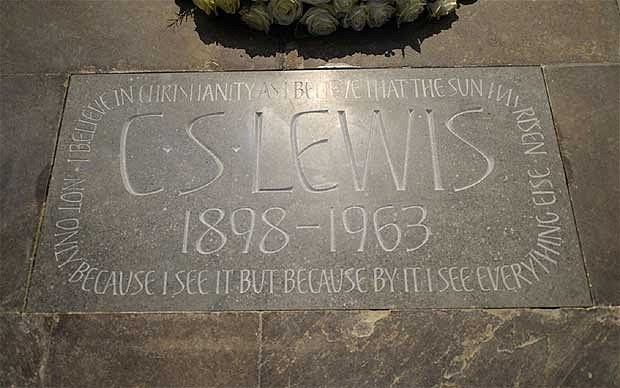
cannot fit in any of these things, not even science itself. I believe in
Christianity as I believe that the sun has risen: not only because I see it,
but because by it I see everything else.
Lewis believed that Christian theology gave grounds for
reason and thus reasoning about what is true. Therefore it makes sense of
science. Put another way, if science bets its existence on naturalism, then it
will ultimately undermine itself.
His more
sustained argument can be found in the 1947 apologetic work, Miracles, a key chapter of which
(chapter three) he revised for the 1960 edition, from which I will quote.
The argument in Miracles (1947, revised 1960)
Starting
with Lewis’s arguments against naturalism, I turn to his most sustained,
discussed, and debated presentation, the opening chapters of Miracles, particularly the third
chapter, “The Cardinal Difficulty with Naturalism.” As I mentioned above, Lewis
defines naturalism simply as the belief that nature is all there is, and he
also provides a more extensive definition in Miracles: Naturalism
is “the doctrine that only Nature—the whole interlocked system–exists. And if
that were true, every thing and event would, if we knew enough, be explicable
without remainder (no heel taps) as a necessary product of the system.”
He continues the essence of the argument he presented in “Is Theology Poetry?”
(and elsewhere)—that in order for reason to exist there must be something
greater or “above” (super in Latin)
and thus there must be Supernature.
Lewis
presents his argument against naturalism to kick away a support for
disbelieving in miracles. If there is nothing that supervenes over nature, then
miracles are impossible. If there is, however, a Supernature, then it, or God,
could act in ways contrary to the nexus of cause and effect in the natural
world. That a central reason he argues against naturalism.
Now
Lewis’s argument against naturalism is reasonable simple. It starts with the
premise that
(1) Naturalism asserts that all that exists is
part of the natural, or material world, of cause and effect.
(2) Reason, being a part of all that is, must
therefore be a component solely of the natural world.
(3) Yet, in order for reason to discover
truth, it cannot be solely based on natural, or material, cause and effect.
(4) Therefore naturalists cannot fit reason
into their system.
(5) Consequently, we cannot know that
materialism is true.
As a
result of the well-known debate with the eminent Oxford philosopher Elizabeth
Anscombe at the Socratic Club on February 2, 1948, Lewis conceded that Anscombe
had pointed out flaws in his essential argument. He presented changes in the
1960 revision to Miracles, noting a
key distinction between Cause-Effect and Ground-Consequent. She too, according
to subsequent reflection, felt that he had admitted problems, noting his
“honesty and seriousness” as a philosopher. She did not, however, conclude he
destroyed, as later commentators would assert. A. N. Wilson, who, in his 1990s
biography of Lewis, labored incessantly (and even cooked a few facts) to make
Lewis look unworthy of serious attention repeats a somewhat tired argument that
Lewis retreated from apologetics (such as Miracles)
to children’s literature (i.e., Narnia)
after this encounter. (Below I will note how Wilson’s mood changed
significantly a few years ago.) He continues by asserting that Lewis even
patterned the evil White Witch of Narnia, Jadis, after Anscombe. I find it
difficult to take that sort of assertion seriously. These,
and other similar, assertions are overblown. Nonetheless, Lewis stated to his
pupil, George Sayer, “I can never write another book of that sort.”
Indeed, Lewis turned his attention away from rational apologetics to
imagination.
I have presented the critical elements of his revised
presentation, not to engage them directly (others have done so effectively),
but to demonstrate more that Lewis more away from argument to story, from
justification to signification. Or put another way, as Michael Ward does in Planet Narnia, Lewis moved from
Contemplation to Enjoyment. This is a key distinction that Lewis makes in Surprised by Joy, which he picked up
from Alexander. So in 1950, when he began the “Narniad” as it is called, he
wanted to enjoy what reasoning
implied (a first order experience), not contemplate
reason, or think about thinking (a second-order experience).
What has
made Lewis a valuable mentor for me is that this argument insulated me from the
materialist environment of Berkeley during my undergraduate years even before I
felt the full force of the materialists’ worldview. Its apologetic force remains
surprisingly relevant for today’s anti-theistic—I have noted Pinker and
Dawkins, but there are many others. I have found myself, as one committed to
the glory of scientific insight along with my Christian faith, leaning on
Lewis. He does not argue that one must conclude that naturalism is
self-defeating, only that that it is very likely to be self-defeating. And I
have not found a rejoinder, although many have been tried,
and the debate shows no signs of abating.
It is not exactly an argument for Christian faith, but as he concludes in “Is
Theology Poetry?” he does offer that theism—specifically, the creation of the
world by a rational Creator—offers the best ground for human reason. For this
reason, Lewis brings together a rigorous reasoning alongside a robust faith in
God as Creator.
A final thought
Perhaps the best
closer for this chapter comes from the pen of A. N. Wilson, the brilliant, but
cranky biographer of Lewis who remained, for decades, a committed, atheist.
Just a few years ago, he changed his mind. In an April 2009 article in
MailOnline, he wrote this,
Our bishops and theologians, frightened
as they have been by the pounding of secularist guns, need that kind of bravery
(like Sir Thomas More’s) more than ever. Sadly, they have all but accepted that
only stupid people actually believe in Christianity, and that the few
intelligent people left in the churches are there only for the music or believe
it all in some symbolic or contorted way which, when examined, turns out not to
be belief after all. As a matter of fact, I am sure the opposite is the case
and that materialist atheism is not merely an arid creed, but totally
irrational. Materialist
atheism says we are just a collection of chemicals. It has no answer whatsoever
to the question of how we should be capable of love or heroism or poetry if we
are simply animated pieces of meat.
That seems in the mode of C. S. Lewis himself. But
Lewis did not stop with simply impugning naturalism—a negative
accomplishment—he also presented a positive argument for the God who is more
than this material world can offer. That topic will await another post.